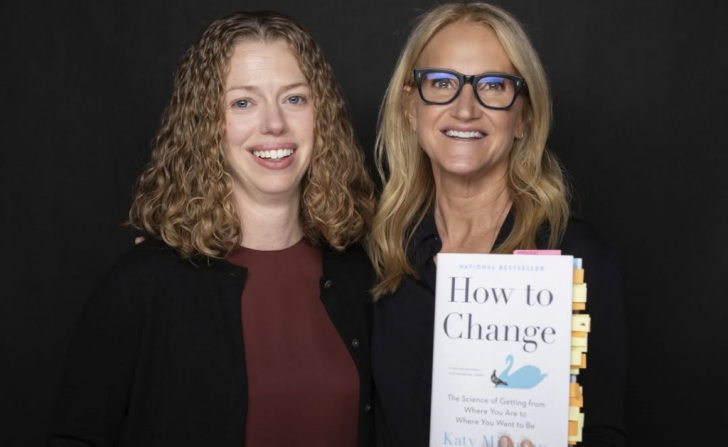
Katherine L. Milkman, a professor at The Wharton School of the University of Pennsylvania and author of “How to Change” and “Where You Are to Where You Want to Be”, has spent years studying one stubborn question. Why do smart, motivated people fail to change, even when they want to?
Her research points to an uncomfortable answer. Most people rely on motivation, and motivation is unreliable. It rises with hope and falls with stress, boredom, or bad weather. Real change does not come from trying harder. It comes from designing habits that work even when motivation disappears.
In 2026, the science is clear. If resolutions are going to last, they must be built around how the brain actually behaves, not how people wish it behaved.
The Real Problem With New Year’s Resolutions

Motivation is emotional, temporary, and sensitive to setbacks. One missed workout or skipped week can unravel the whole plan.
Behavioral science shows that the brain prefers ease and immediate rewards. Long-term benefits like better health or savings feel distant. When a choice feels hard now and rewarding later, the brain often chooses comfort.
Milkman’s research emphasizes systems over effort. When behaviors are designed to be automatic, they demand less mental energy. Over time, repetition reshapes neural pathways. What once felt hard becomes routine. That is how habits stick.
Use Fresh Starts to Reset Momentum
The urge to start fresh on January 1 is not random. Milkman’s research identifies this as the Fresh Start Effect. Temporal landmarks like New Year’s Day, birthdays, Mondays, or even the first day of a new job create mental breaks from past failures.
These moments increase optimism and motivation. Studies show that when people are encouraged to begin saving or exercising after a fresh start date, participation rises by 20 to 30 percent. The psychological reset makes goals feel achievable again.
However, fresh starts can also disrupt progress. A vacation or schedule change can knock people out of good routines. The key is planning the restart in advance. Successful changers expect disruption and prepare for it.
Make Good Habits Instantly Rewarding
In a large field experiment, participants were allowed to listen to gripping audiobooks only while exercising. Gym attendance increased by 51 percent. The habit worked because it delivered immediate pleasure, not just future benefits.
This strategy works because humans are biased toward the present. The brain values rewards now more than rewards later. Temptation bundling flips that bias into an advantage. Laundry becomes podcast time. Healthy cooking becomes a favorite playlist time. The habit stops feeling like a sacrifice.
Build Systems That Remove Daily Decisions
Milkman’s work consistently shows that willpower is a weak tool. Strong systems outperform strong intentions. When the environment supports a habit, less self-control is needed.
One effective technique is implementation intentions. Instead of vague goals like “eat better,” successful planners use clear if-then statements. If it is Sunday night, then vegetables are prepped for the week. If it is 7 a.m., then a walk happens.
These plans reduce friction and hesitation. Research shows they dramatically increase follow-through because the decision is already made. There is no debate in the moment.
Environment shapes behavior more than personality. Milkman emphasizes making good habits easy and bad habits slightly harder. Small changes can have outsized effects.