
Deep-frying at home often gets labeled as messy, wasteful, and hard to manage. The thought of lingering smells, oily surfaces, and leftover oil can feel like more trouble than it’s worth.
Yet, perfectly crisp onion rings or golden chicken cutlets still hold their appeal. Freshly fried food delivers a texture and taste that’s hard to match with other cooking methods.
The real advantage comes from knowing how to handle frying oil the right way. With proper care, oil can be reused safely, saving money while cutting down on waste—without affecting the quality of food.
Selecting the Right Oil Matters
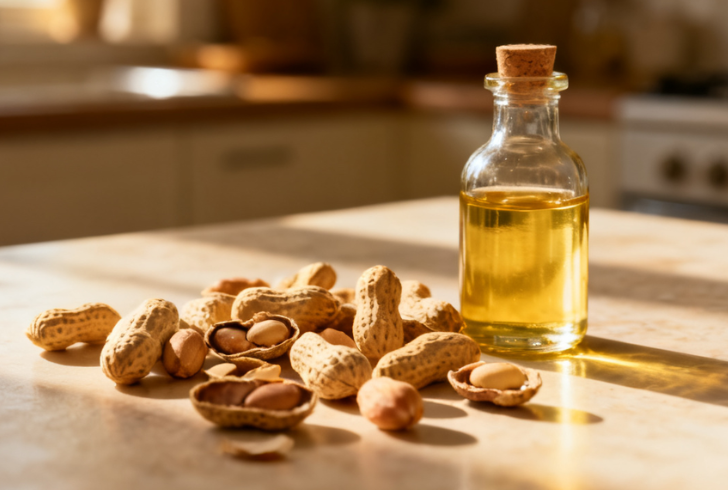
The foundation of long-lasting frying oil starts with the type of oil used. Not all oils behave the same under heat. Oils with a high smoke point and a neutral flavor tend to perform better during repeated frying sessions.
A smoke point above 400°F (205°C) is ideal. Oils such as peanut oil, corn oil, canola oil, grapeseed oil, and avocado oil fit this range well. These options remain stable at high temperatures and do not easily break down. While olive oil can also be used, its higher cost makes it less practical for frequent deep-frying.
Choosing affordable oils with strong heat tolerance makes repeated use more efficient without sacrificing food quality.
Temperature Control Shapes Oil Lifespan
Oil begins to degrade the moment it heats up. Exposure to heat, air, and light gradually changes its structure. When oil exceeds its smoke point, the breakdown accelerates. This not only reduces its usability but also affects the taste of food.
Overheated oil releases a compound called acrolein. This chemical creates a sharp, bitter flavor and an unpleasant smell. In some cases, oil may even give off a fishy odor, even when frying non-seafood items.
Maintaining steady heat is key. A controlled temperature prevents premature breakdown and keeps the oil usable for longer. Sudden spikes in heat should be avoided, as they weaken the oil’s structure and lower its smoke point over time.
Consistent monitoring during frying ensures better results and extends the oil’s life.
Clean Oil Performs Better Over Time
Oil quality depends heavily on how clean it remains during and after frying. Small food particles left behind in oil continue to cook every time the oil is reheated. Over time, these particles burn and release compounds that speed up oil degradation.
This process leads to darker oil, unwanted flavors, and smoke appearing at lower temperatures.
Koichi Endo, known for his expertise in deep-frying at the Michelin-starred restaurant Tempura Matsui in New York, highlights the importance of preparation. He recommends drying ingredients thoroughly before frying to prevent splattering. Excess moisture not only creates safety risks but also affects oil stability.
Heavy coatings or poorly applied dredges tend to fall off during frying, leaving behind residue. Foods with lighter batters, usually leave fewer impurities compared to heavily breaded items like chicken cutlets.
During frying, removing loose crumbs helps maintain oil quality. A fine-mesh strainer can be used to skim out floating particles. Moving the strainer gently through the oil in one direction and then reversing helps capture debris effectively.
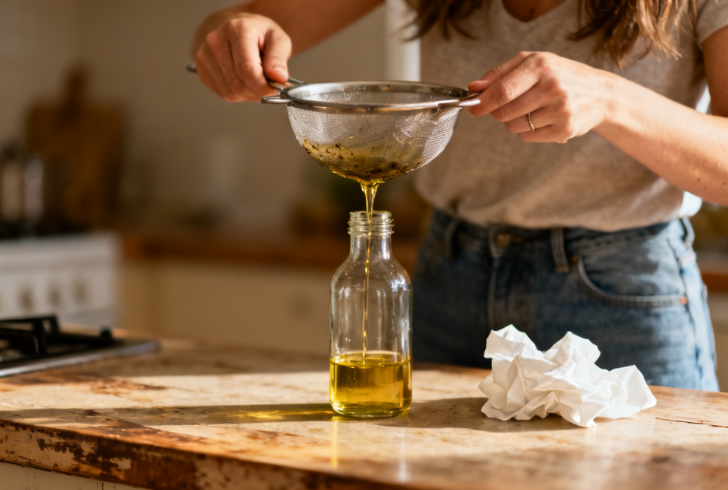
Once frying is complete, the oil should be allowed to cool to room temperature. Straining it through a fine mesh lined with cheesecloth or paper towels removes remaining particles, leaving the oil clearer and more stable for future use.
Proper Storage Keeps Oil Fresh
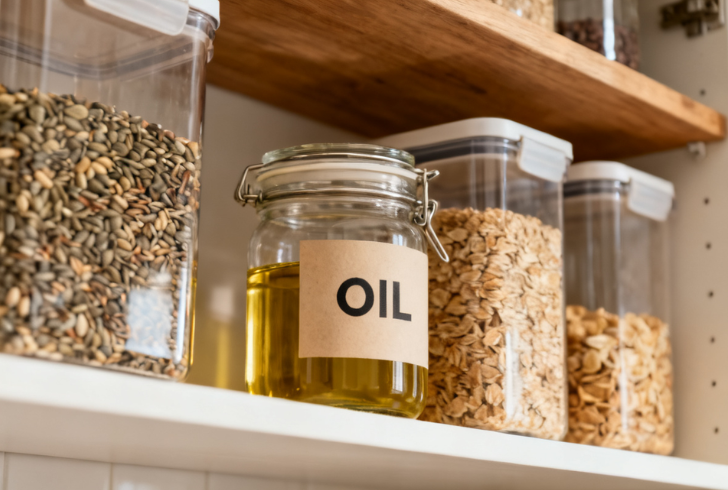
After cleaning, storage plays a major role in preserving oil quality. Oil should be transferred into a clean, airtight container. A resealable bottle or a previously used oil jug works well for this purpose.
Storing oil in a cool, dark place slows down oxidation. Refrigeration is a good option and can extend usability for several months. If fridge space is limited, a pantry away from heat sources is also suitable.
For longer storage, freezing is effective. Low temperatures significantly reduce oxidation, allowing oil to last longer without noticeable degradation. Before reuse, frozen oil should be brought back to room temperature gradually.
Keeping oil away from the stove or direct heat sources is important. Heat exposure speeds up spoilage and shortens its lifespan.
Interestingly, mixing a small amount of used oil into fresh oil can improve frying results. As oil breaks down slightly, it becomes less resistant to water. This helps it interact better with moisture in food, leading to improved browning.
However, this benefit only applies to lightly used oil. Overused oil loses its structure and begins absorbing too much moisture, resulting in greasy and soggy food instead of a crisp texture.
When Reusing Oil Is Not Recommended
Not all frying sessions allow for oil reuse. Oil tends to absorb flavors from the food cooked in it. Strong-smelling foods leave behind noticeable traces that carry into the next batch.
For example, oil used to fry fish or chicken may affect the taste of sweet items like doughnuts, churros, or funnel cakes. The result is an unpleasant mix of flavors that reduces the quality of the dish.
Separating oil use based on food type helps maintain flavor consistency. Using one batch of oil for savory foods and another for sweets keeps results predictable and enjoyable.
Identifying When Oil Should Be Discarded
Even with careful use, oil does not last forever. Recognizing the signs of deterioration helps avoid poor cooking results and potential health concerns.
Several indicators suggest that oil should no longer be reused:
1. A dark or overly thick appearance
2. A sticky texture when handled
3. Visible foam or excessive bubbling, which points to moisture buildup
4. A rancid or sour smell
These changes signal that the oil has broken down beyond safe use. Even if oil appears acceptable after multiple uses, it is best to replace it after a certain number of frying cycles. Repeated heating gradually reduces its stability, even if visible signs are minimal.
Safe and Responsible Oil Disposal
Disposing of used oil requires care. Pouring oil down the drain may seem convenient, but it can lead to clogged pipes and plumbing damage.
Instead, oil should be transferred into a sealed container before disposal. This prevents leaks and makes handling easier. Solidifying agents such as gelatin or waste cooking oil powder can also be used to turn liquid oil into a semi-solid form, making disposal cleaner.
Once contained, the oil can be discarded with regular household waste.
The Balance Between Reuse and Quality
Reusing frying oil is both economical and practical when done correctly. It reduces waste and cuts down on repeated purchases. At the same time, quality should not be overlooked.
Oil that is carefully maintained can deliver consistent frying results across multiple uses. Once it begins to show signs of breakdown, replacing it becomes necessary to preserve both flavor and texture.
Reusing frying oil offers clear advantages when handled with attention and care. Choosing the right oil, controlling heat, and keeping it clean all contribute to longer usability. Proper storage slows down spoilage, while mindful reuse ensures food retains its intended flavor.
Understanding when oil has reached its limit is just as important as knowing how to preserve it. Discarding it safely protects both cooking quality and kitchen infrastructure.
With these methods in place, deep-frying at home becomes less wasteful and more efficient, delivering crisp, satisfying results without unnecessary compromise